At a Glance (as of 4 August 2026)
- $205.58M total market size
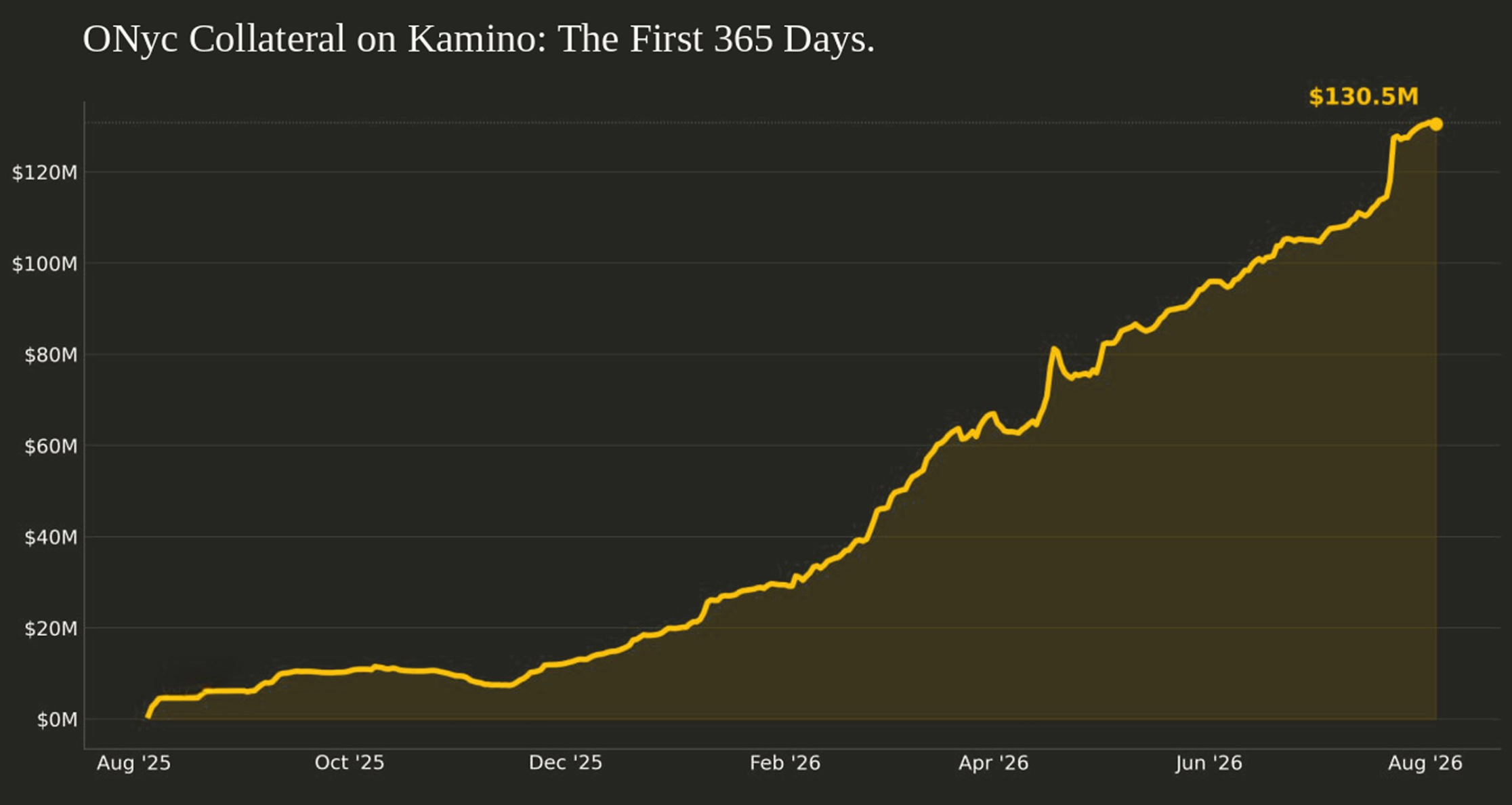
- $130.5M ONyc collateral, 31.9% of Kamino’s RWA collateral
- $75.08M stablecoin liquidity
- $70.85M borrowed across 2,594 loans
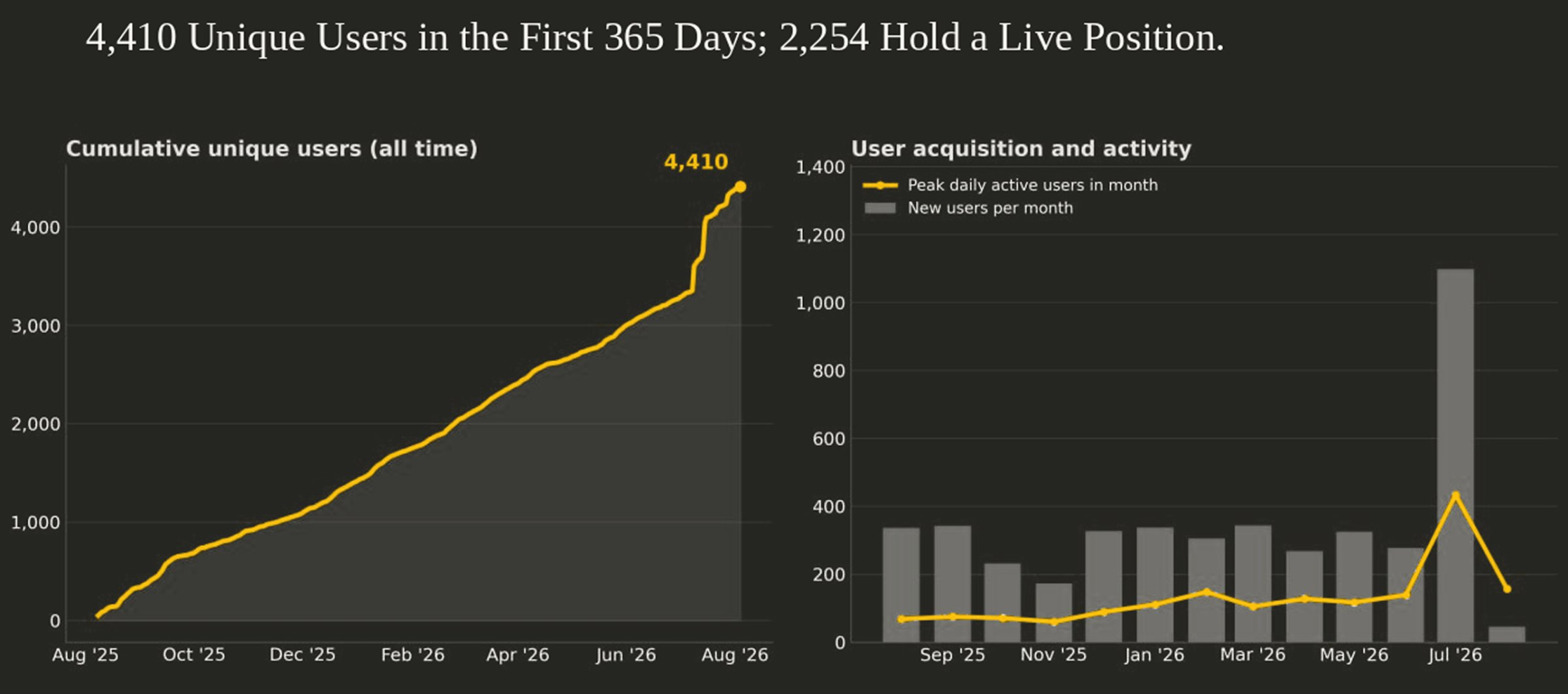
- 2,254 active users (51% retention)
- $1.33B transaction volume across 57,187 transactions
- 60x deposit capacity growth (2M → 120M ONyc)
- 53% of OnRe protocol AUM is deployed on Kamino
- Kamino’s second-largest RWA market and fourth-largest lending market overall
Growth Compounded
$205M Built Through Sustained Demand
The OnRe Market expanded rapidly throughout its first year. ONyc collateral on Kamino grew from less than $1M at launch to more than $130M . As the market matured, growth accelerated. The first $100M in market size took approximately seven months to build, while the second required only four. By its first anniversary, the market had reached $205.58M in total deposits, averaging roughly $560K in net growth per day. That total comprises $130.5M in ONyc collateral and $75.08M across USDC, USDG, and USDS supply assets.
From Depositors to Active Borrowers
The market attracted 4,410 unique users in its first year, and more than half of all wallets that have ever participated still hold a live position. 61% of all users have borrowed against their ONyc, which shows the asset functioning as working collateral across the user base. July 2026 was the strongest month for new users.
Twelve Months of Expansion
• August 2025: The OnRe Market launches with 2M initial capacity, raised in three increments to 6M within the first month. ONyc Multiply launches with USDC and USDG.
• September 2025: Capacity increases from 6M to 20M as the market surpasses $15M in total size. USDS is added as a lending asset.
• January 2026: Capacity increases from 20M to 30M.
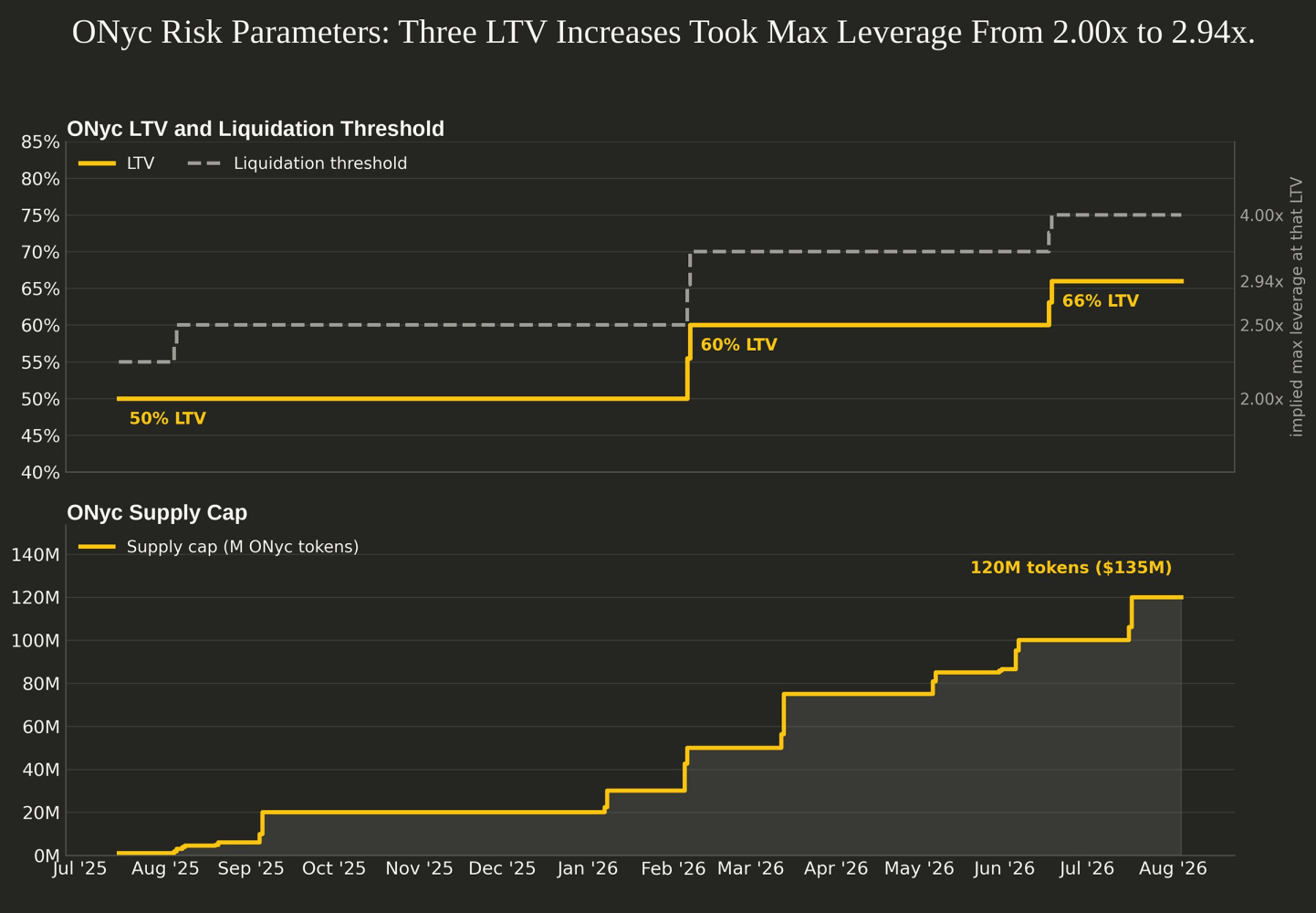
• February 2026: Capacity increases from 30M to 50M as the market surpasses $50M in size. Maximum LTV increases to 60% (2.5x leverage) and USDG deposits exceed $10M.
• March 2026: Capacity increases from 50M to 75M as the market surpasses $100M in total size.
• May 2026: Capacity increases from 75M to 85M.
• June 2026: Capacity increases from 85M to 100M. The market surpasses $150M in total size, ONyc collateral exceeds $100M, PT-ONyc is added as collateral, and maximum LTV increases to 66% (2.9x leverage).
• July 2026: Capacity increases from 100M to 120M as the market surpasses $200M in total size.
A Working Credit Market
The OnRe Market connects stablecoin suppliers seeking market-driven yield with ONyc holders seeking capital efficiency. ONyc generates reinsurance yield even while posted as collateral, allowing users to borrow liquidity, increase exposure through Multiply, or maintain fixed-rate positions using PT-ONyc from Exponent.
Yield Driven by Real Borrower Demand
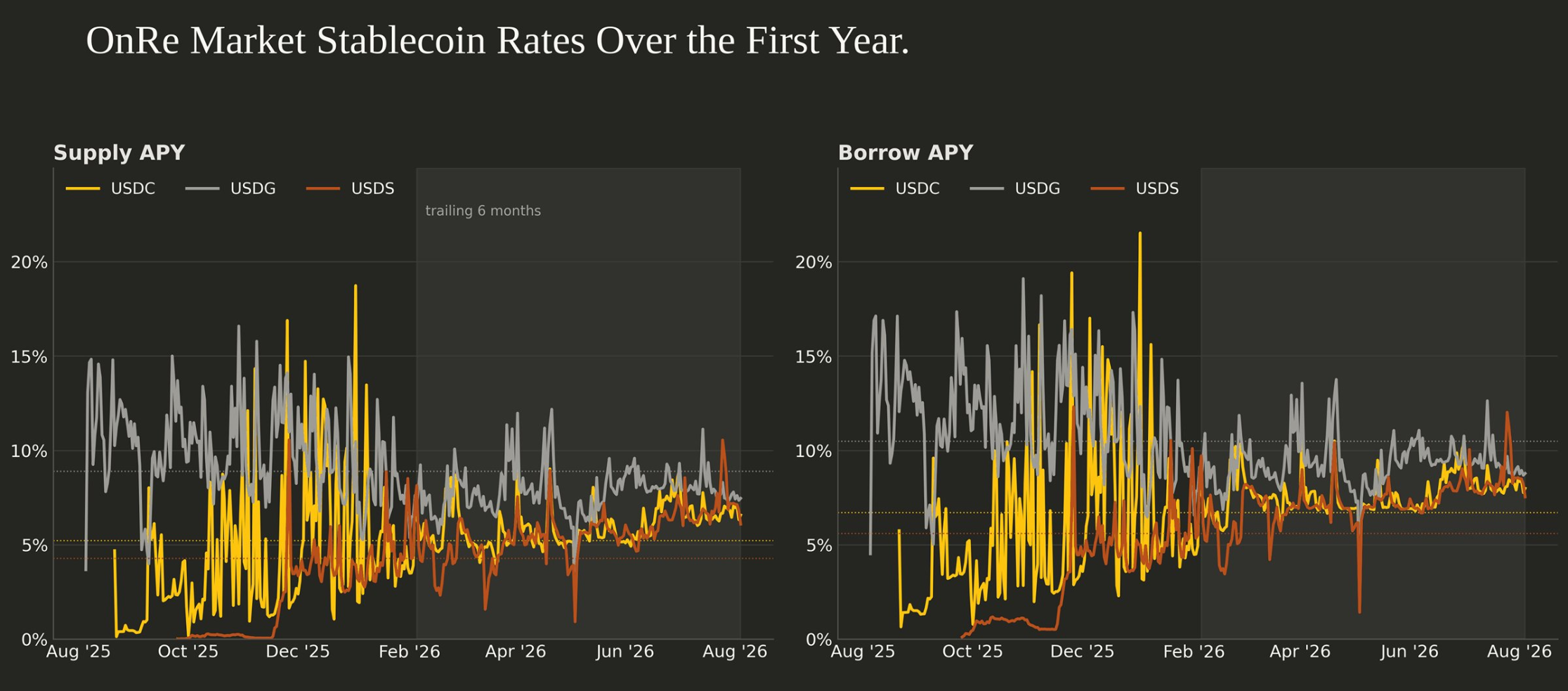
Over the market's first year, average supply APYs were 6.09% for USDC, 8.29% for USDG, and 4.09% for USDS, while average borrow APYs reached 7.73%, 9.81%, and 6.05%, respectively. Eligible deposits also accrued OnRe Points, with selected markets receiving additional supply and borrow incentives.
Stablecoin suppliers earned yield generated directly by borrower demand. Borrowers paid a premium over lender yields to access capital-efficient exposure to ONyc, with the primary use case being ONyc Multiply, where users borrowed stablecoins against their collateral to acquire additional ONyc while continuing to accrue the underlying yield. The addition of PT-ONyc as collateral extended these strategies by allowing fixed-rate positions to remain productive while unlocking liquidity.
Institutional Capital Backed by the Market
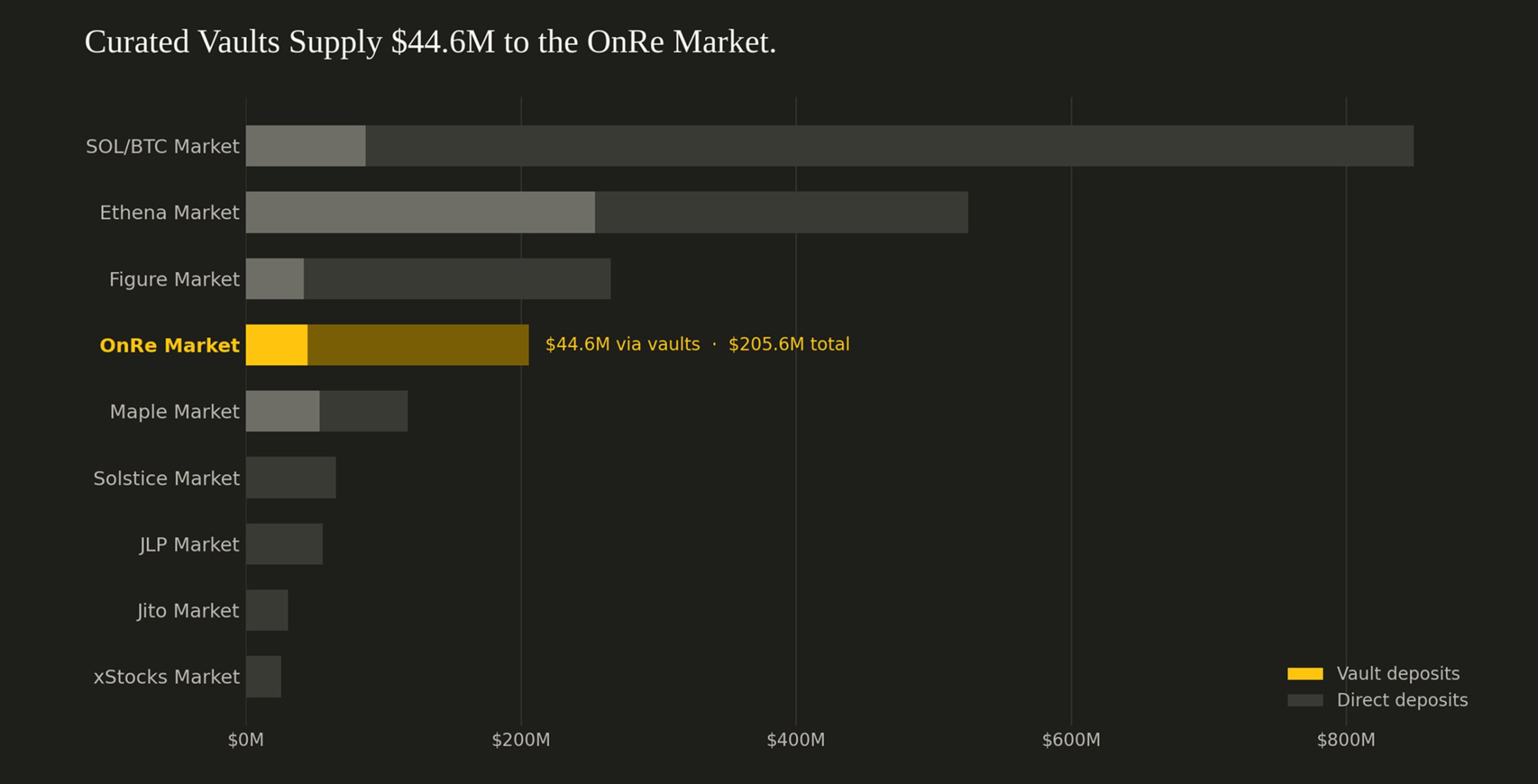
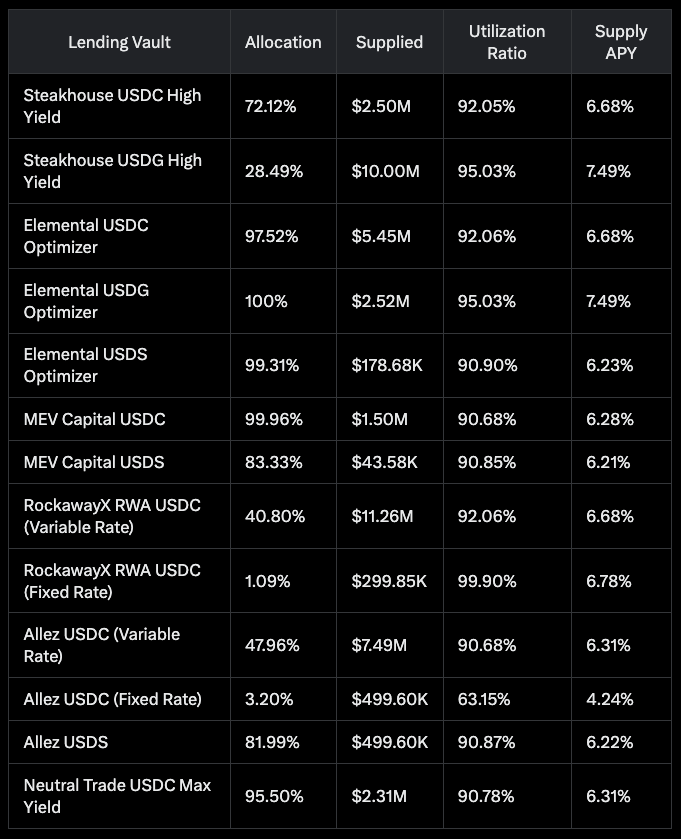
Roughly 60% of the market’s stablecoin liquidity, $44.6M as of 4 August 2026, is supplied through curated lending vaults on Kamino. Managers including Steakhouse, Elemental, RockawayX, Allez Labs, and others allocate to the OnRe Market as a yield source. This gives the supply side a base of professionally managed liquidity, helping maintain utilization between 90% and 95% despite repeated capacity expansions.
OnRe Market Allocation by Vault
Capital-Efficient Leverage
ONyc's underlying yield remained stable throughout the year, averaging approximately 11%, meaning changes in Multiply performance were driven primarily by funding costs rather than fluctuations in the underlying reinsurance portfolio. Even as borrowing markets evolved, ONyc Multiply strategies consistently generated double-digit net APYs across USDC, USDG, and USDS.
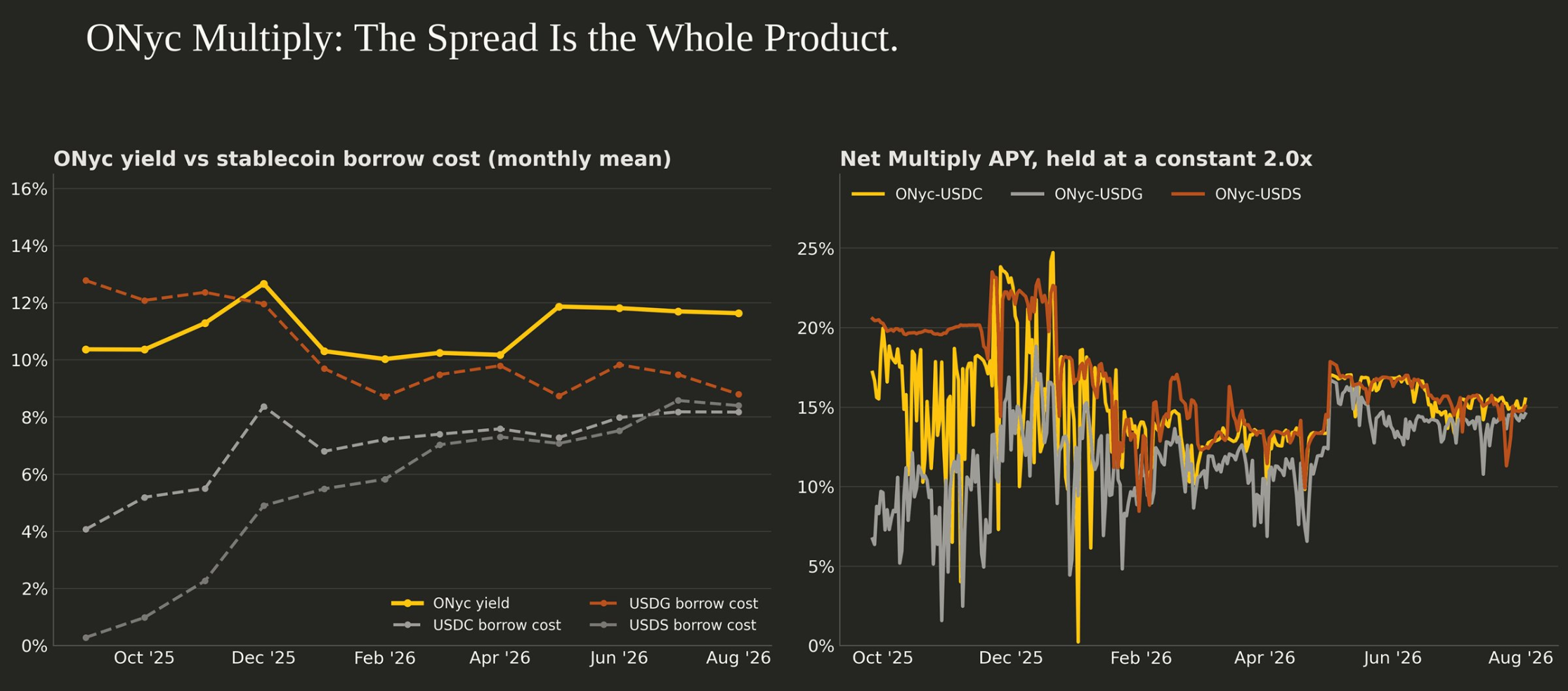
Over the last six months, Multiply strategies at maximum leverage generally returned net APYs in the high teens on ONyc/USDC and ONyc/USDS, while ONyc/USDG averaged 20% (22% in recent months), the highest sustained return profile among the three supported lending markets. Across changing funding environments, the spread between ONyc's yield and borrowing costs kept leveraged returns positive throughout the year.
Compared with other RWA markets on Kamino, where comparable leveraged returns often required between 4x and 12.5x leverage, ONyc achieved higher returns with materially lower leverage at 2.9x.

Built to Scale
Capacity Expansion
The OnRe Market launched with conservative risk parameters and expanded them only after demand was demonstrated. Deposit capacity increased 60-fold over the year, from 2M to 120M ONyc, with each raise following sustained utilization. Loan-to-value limits rose incrementally on the same principle, improving capital efficiency without loosening the risk framework.
Efficient Capital Utilization
By 4 August 2026, ONyc collateral had reached $130.5M against a $135M supply cap, utilizing roughly 97% of available capacity, with a further $2.1M in PT-ONyc posted as collateral in its own reserve. Borrowers had drawn $70.85M in stablecoin liquidity while collectively utilizing just 54% of posted collateral value, illustrating that the market achieved high capital efficiency without approaching maximum LTV limits.

Risk Record
ONyc's NAV did not decline on a single day of the market's first year, and borrower behavior remained conservative throughout. The market scaled through ten capacity increases without a realized credit loss, and even as borrowing limits rose, aggregate collateral utilization held near 54%, well below the maximum.
Standing Among RWAs
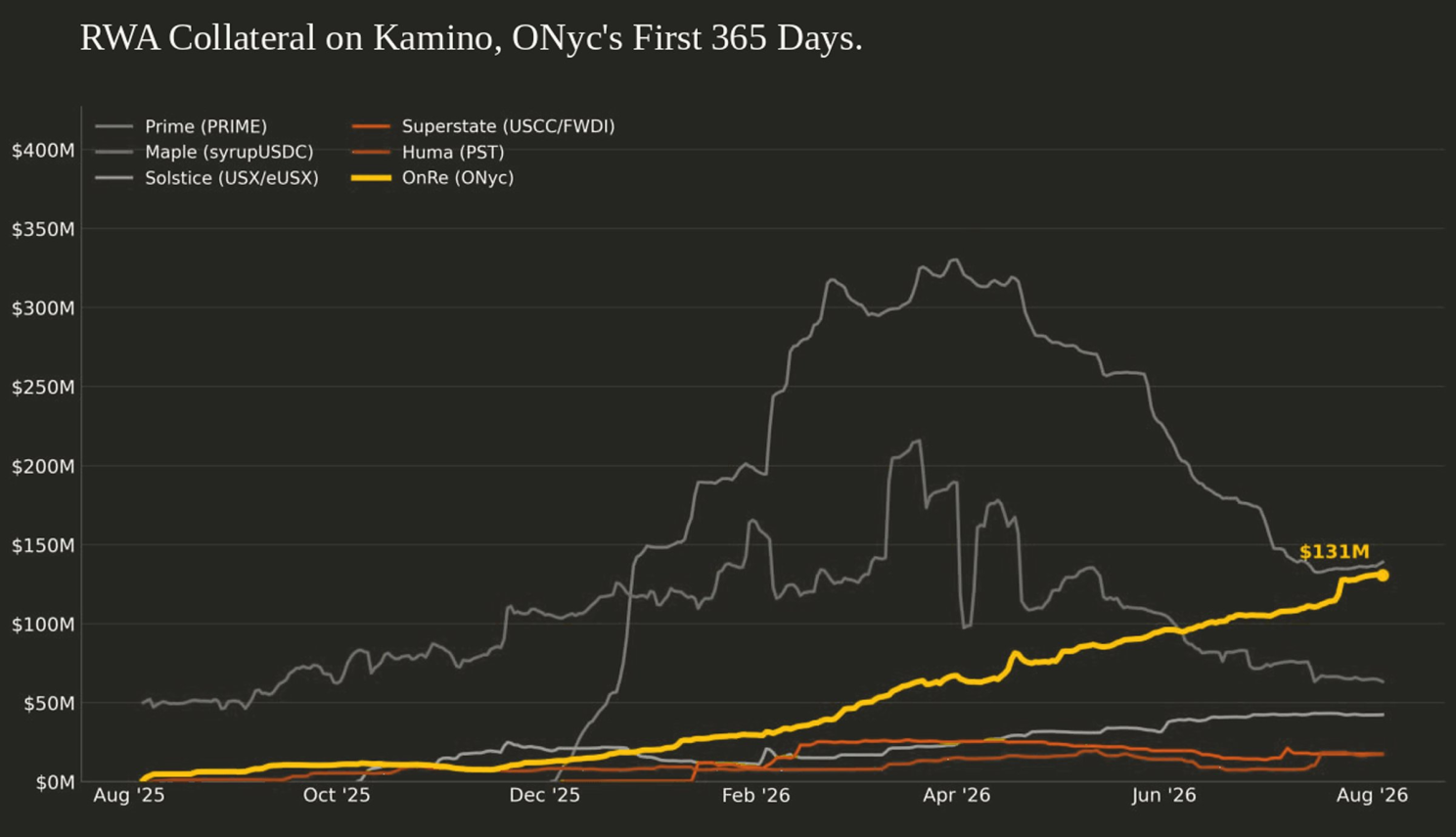
Independent analysis by Allez Labs compared ONyc against Kamino's largest tokenized real-world asset collateral markets over its first year. While several established RWA markets experienced rapid inflows followed by sharp reversals, ONyc consistently gained market share as much of the broader RWA sector retraced.
Growing Market Share
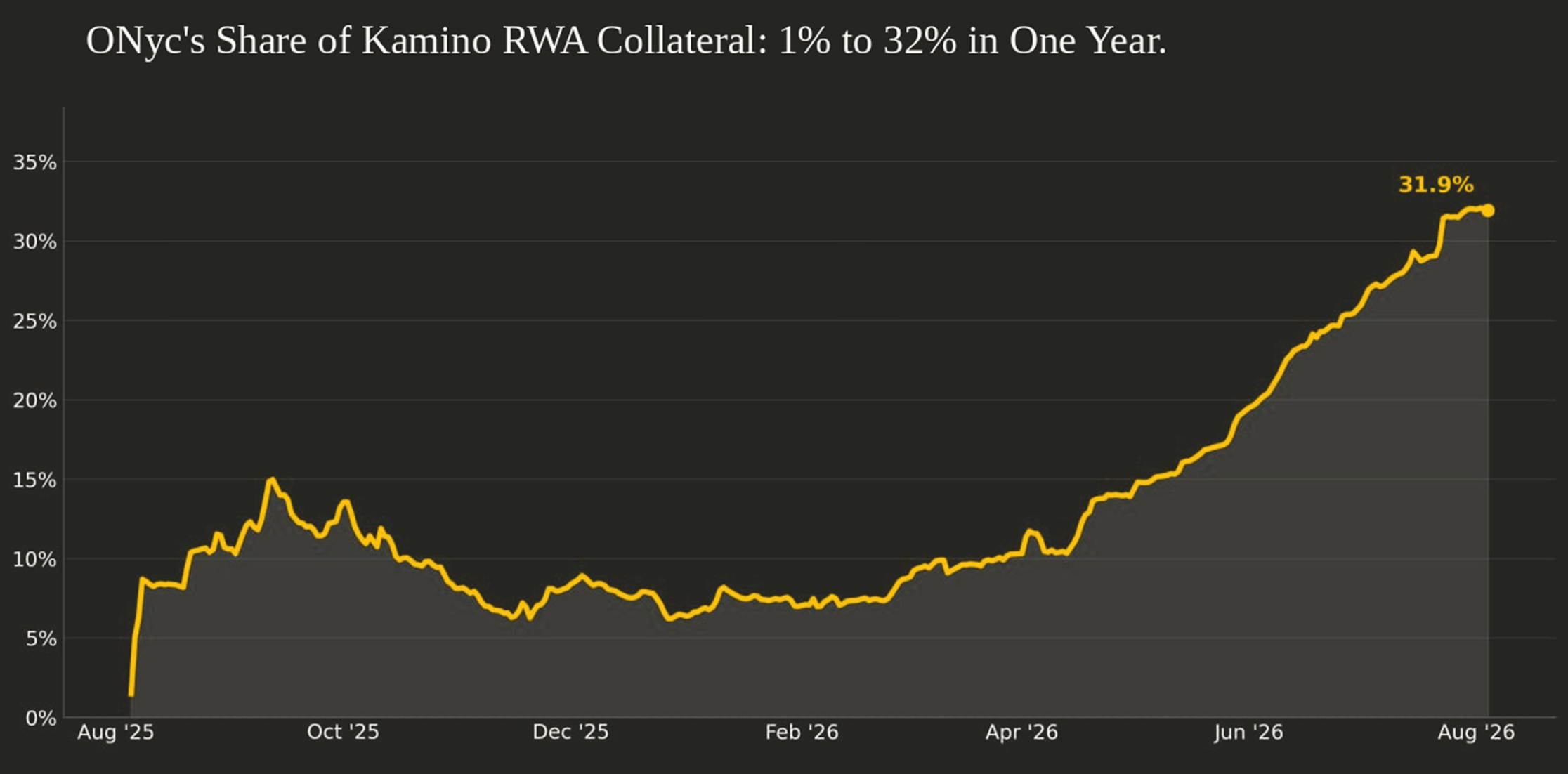
ONyc's share of Kamino's RWA collateral increased from approximately 1% at launch to nearly 32% by the end of its first year. Market share increased through sustained net inflows, ultimately making ONyc Kamino's second-largest RWA collateral market.
Outperforming the Cohort
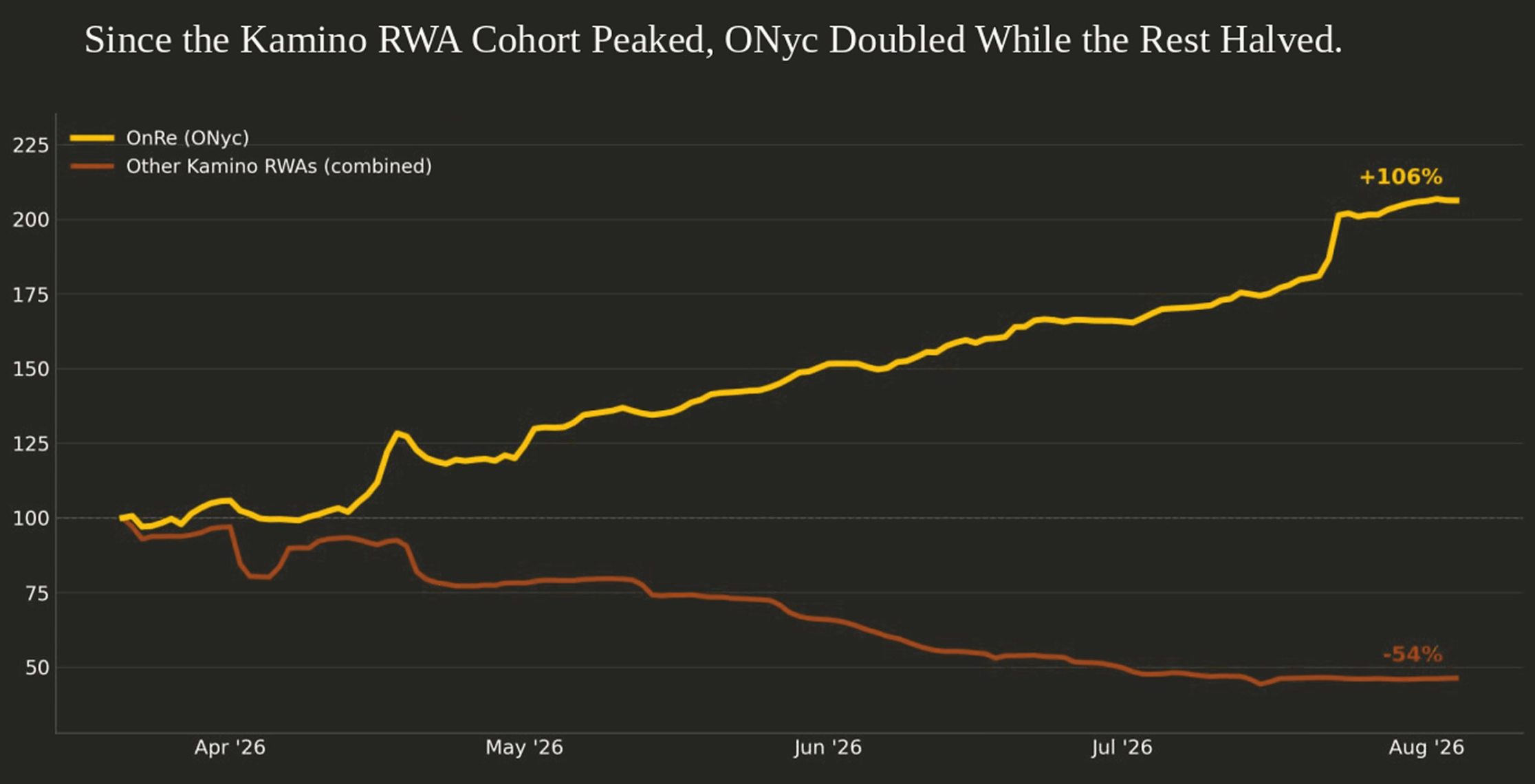
The divergence became most apparent after the Kamino RWA cohort reached its peak in March 2026. From that point forward, ONyc collateral increased by 106%, while the remainder of the major RWA cohort declined by 54%. As capital rotated out of the sector, ONyc absorbed deposits and took share.
Growth in Context
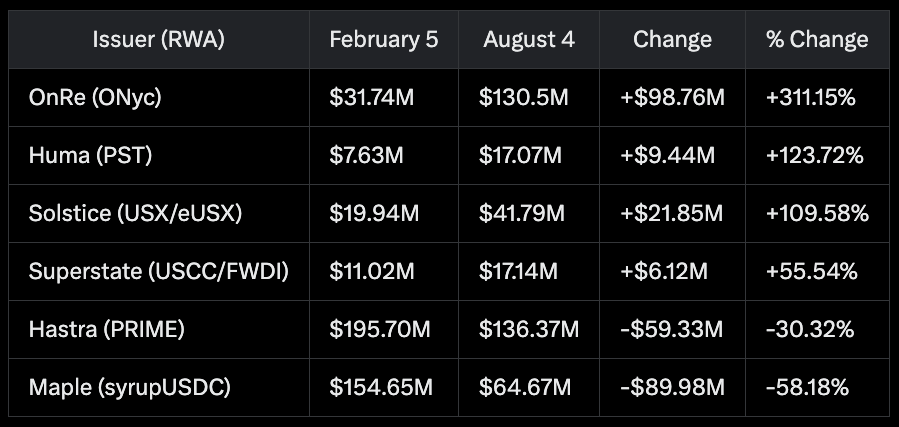
Growth extended beyond collateral share to overall deposits. Between February and August 2026, ONyc collateral increased from $31.7M to $130.5M, a 311% increase. Over the same period, several established RWA markets on Kamino contracted, while ONyc continued to attract sustained net inflows. Among Kamino's major RWA assets, ONyc recorded both the largest absolute increase in collateral and the fastest rate of growth.
.png)
.png)
.png)