Through Exponent, ONyc can be structured across different yield and risk profiles, giving users a way to position around their objectives rather than holding ONyc in a single form.
Exponent enables two core markets for ONyc: rate trading and risk tranching.
Rate trading separates principal from future yield, allowing users to lock in a fixed rate through Principal Tokens (PT) or take leveraged exposure to future yield through Yield Tokens (YT).
Risk tranching separates ONyc exposure into Senior and Junior positions, allowing users to exchange a portion of yield for first-loss protection through srONyc, or provide that protection in exchange for amplified yield through jrONyc.
Together, these markets create four broad ONyc strategies: fixed yield, leveraged yield, protected yield, and amplified yield.
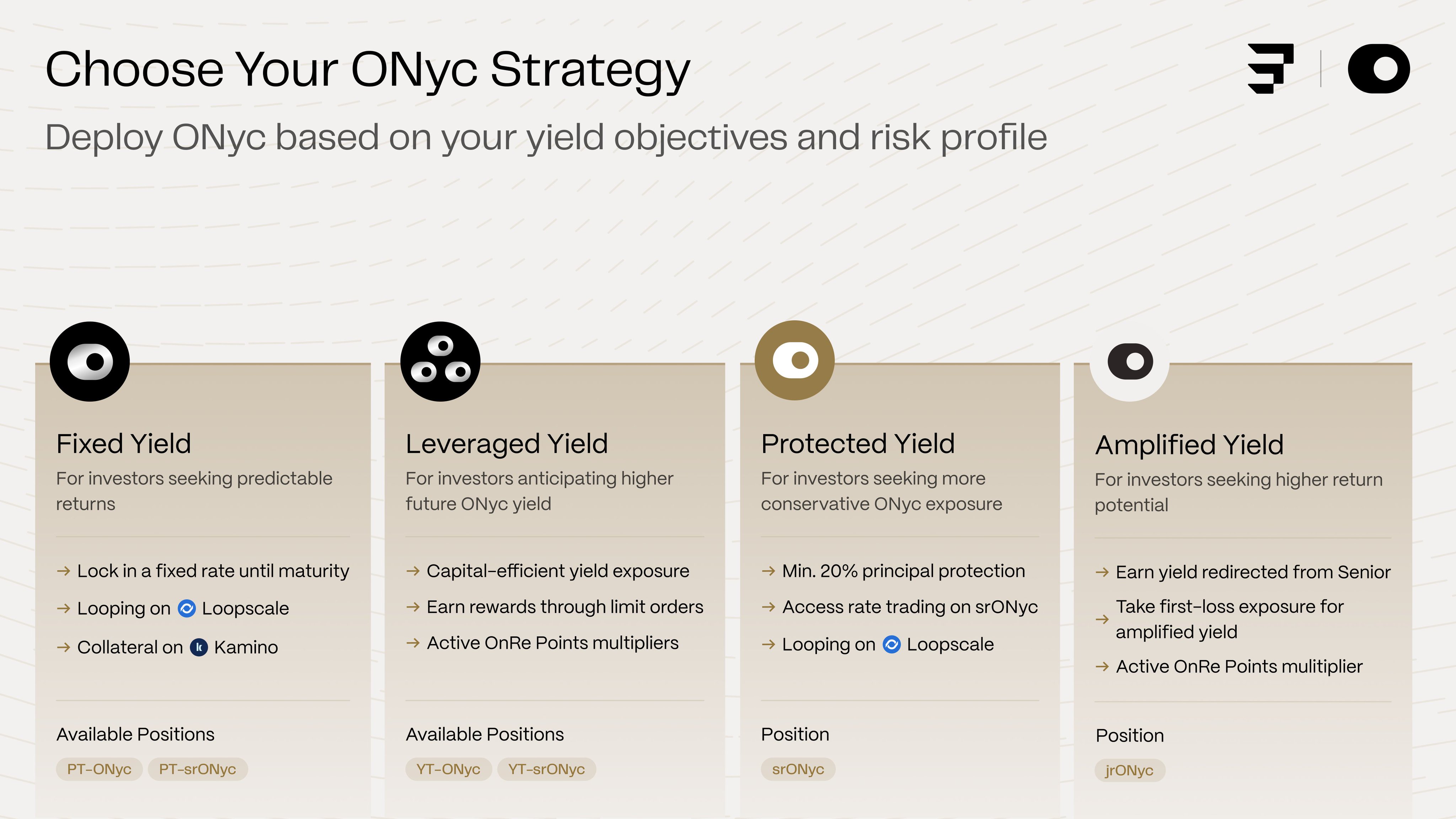
Fixed Yield
Through Exponent's rate trading markets, ONyc and srONyc can be separated into principal and future yield. Principal Tokens (PT) allow users to lock in a fixed return through a defined maturity rather than remaining exposed to changes in the underlying asset's future yield.
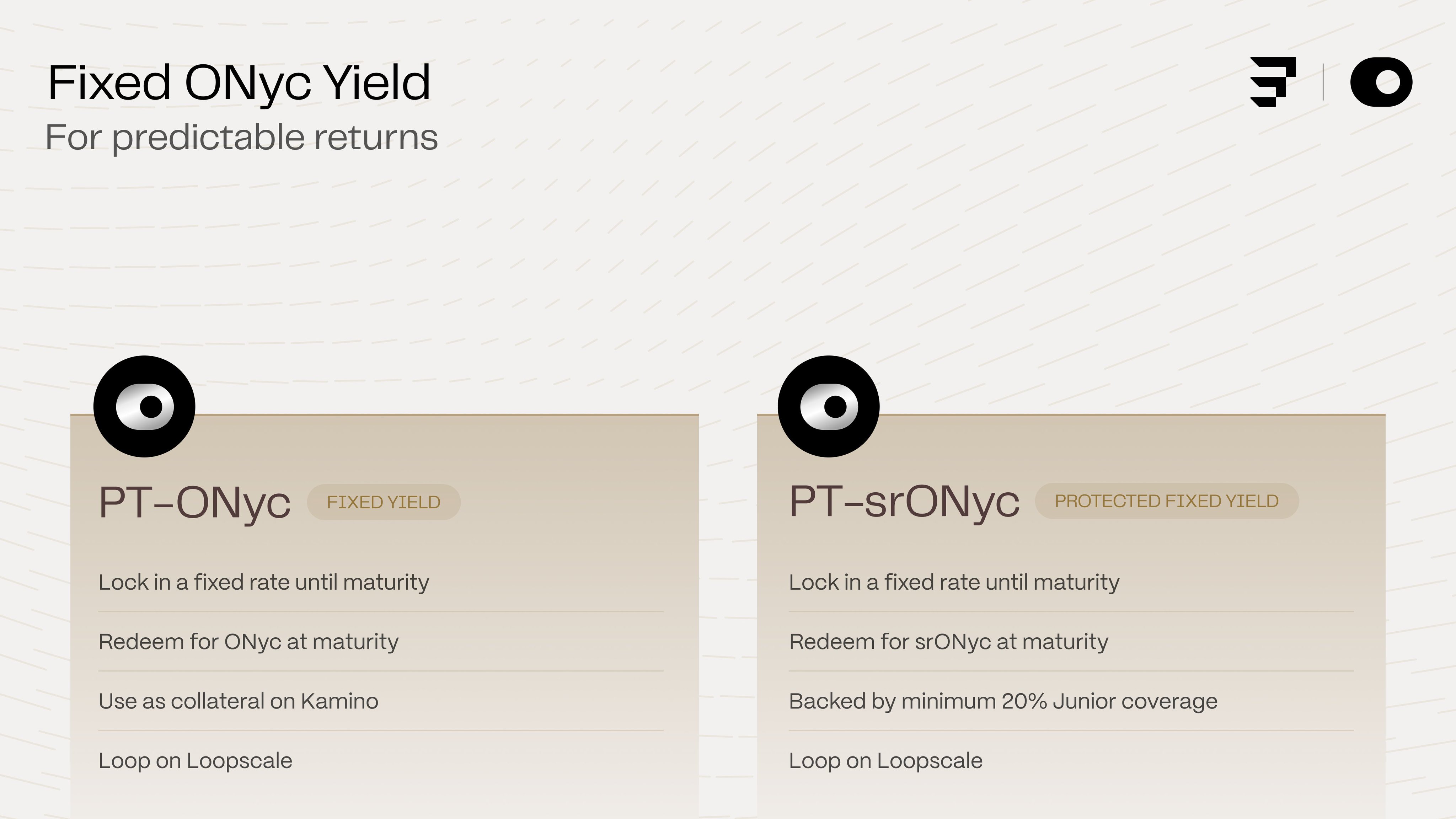
PT-ONyc
PT-ONyc represents the principal component of ONyc for a specific maturity. It can be acquired at a discount to its maturity value and redeemed for ONyc at maturity, with the difference determining the fixed return. This provides a way to lock in an ONyc-denominated yield in advance.
PT-ONyc can also be used across DeFi as collateral on Kamino and in looping strategies on Loopscale.
Best suited for users seeking predictable returns through a defined maturity.
Explore PT-ONyc.
PT-srONyc
PT-srONyc applies the same fixed-rate structure to srONyc.
At maturity, PT-srONyc is redeemable for srONyc rather than ONyc. This combines a fixed yield with the first-loss protection provided by the Junior tranche.
Best suited for users seeking fixed yield with a more protected ONyc risk profile.
Explore PT-srONyc.
Leveraged Yield
The other side of Exponent's rate trading market is the Yield Token (YT), which isolates the future yield generated by ONyc or srONyc through a specific maturity.
Because YT provides exposure to the yield generated by a larger amount of underlying principal without requiring the user to fund that entire principal position, it creates capital-efficient, leveraged exposure to future yield.
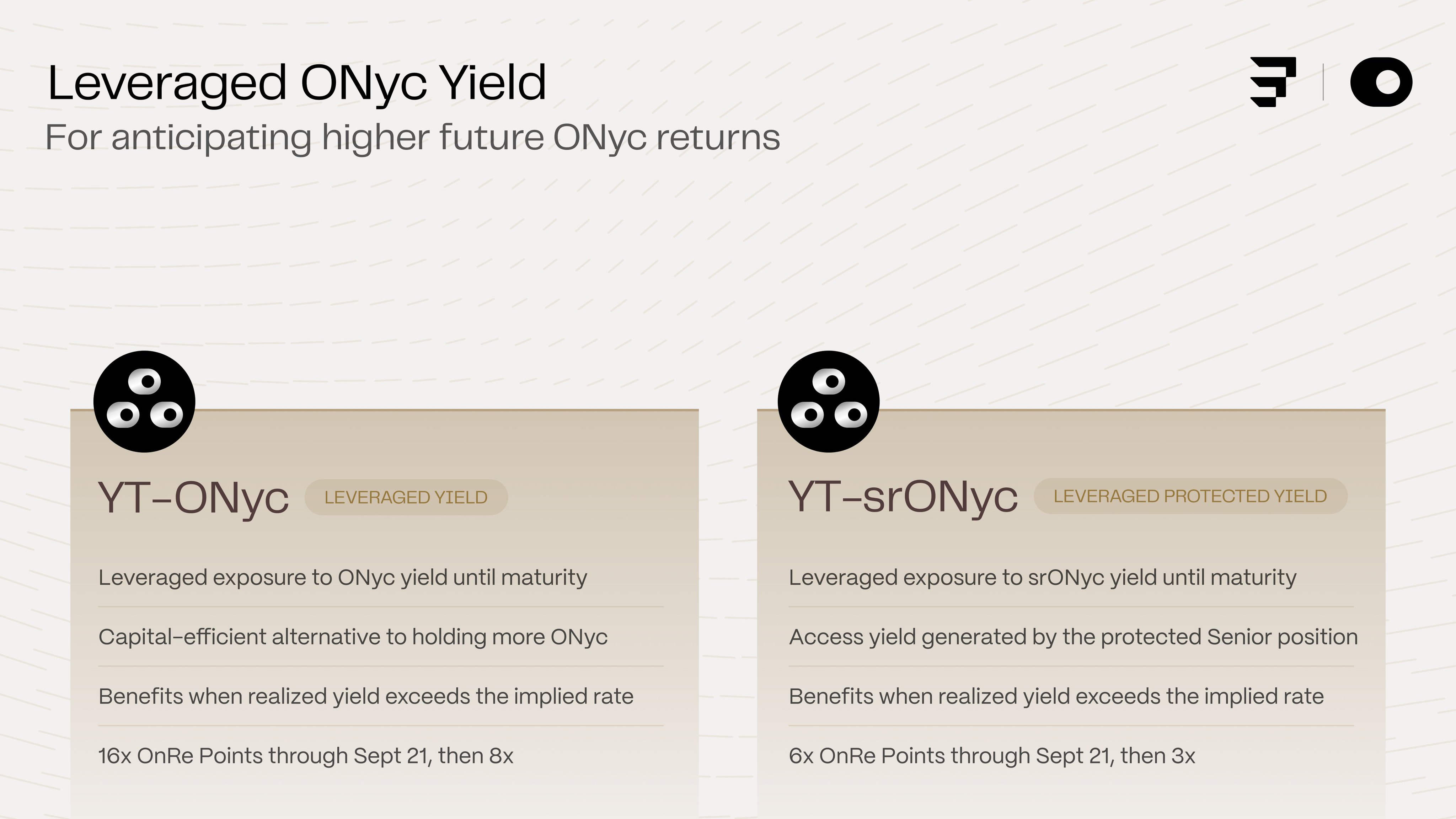
YT-ONyc
YT-ONyc provides exposure to the yield generated by ONyc through maturity.
The position benefits when realized yield over the remaining term exceeds the rate implied by the market price of YT. Conversely, it can underperform when realized yield is lower than the rate implied by the market.
Best suited for users who expect future ONyc yield to outperform the rate currently implied by the market.
Explore YT-ONyc.
YT-srONyc
YT-srONyc provides the same type of leveraged exposure to the future yield generated by srONyc.
Rather than holding the Senior principal itself, the position isolates the yield generated by the Senior side of the ONyc tranching market through maturity.
Best suited for users seeking capital-efficient exposure to future srONyc yield.
Explore YT-srONyc.
Protected Yield
Through Exponent's ONyc Tranching Market, ONyc exposure is separated into Senior and Junior capital.
srONyc represents the Senior side of the structure. Junior capital sits beneath Senior in the loss waterfall, meaning losses are allocated to the Junior tranche before they affect Senior.
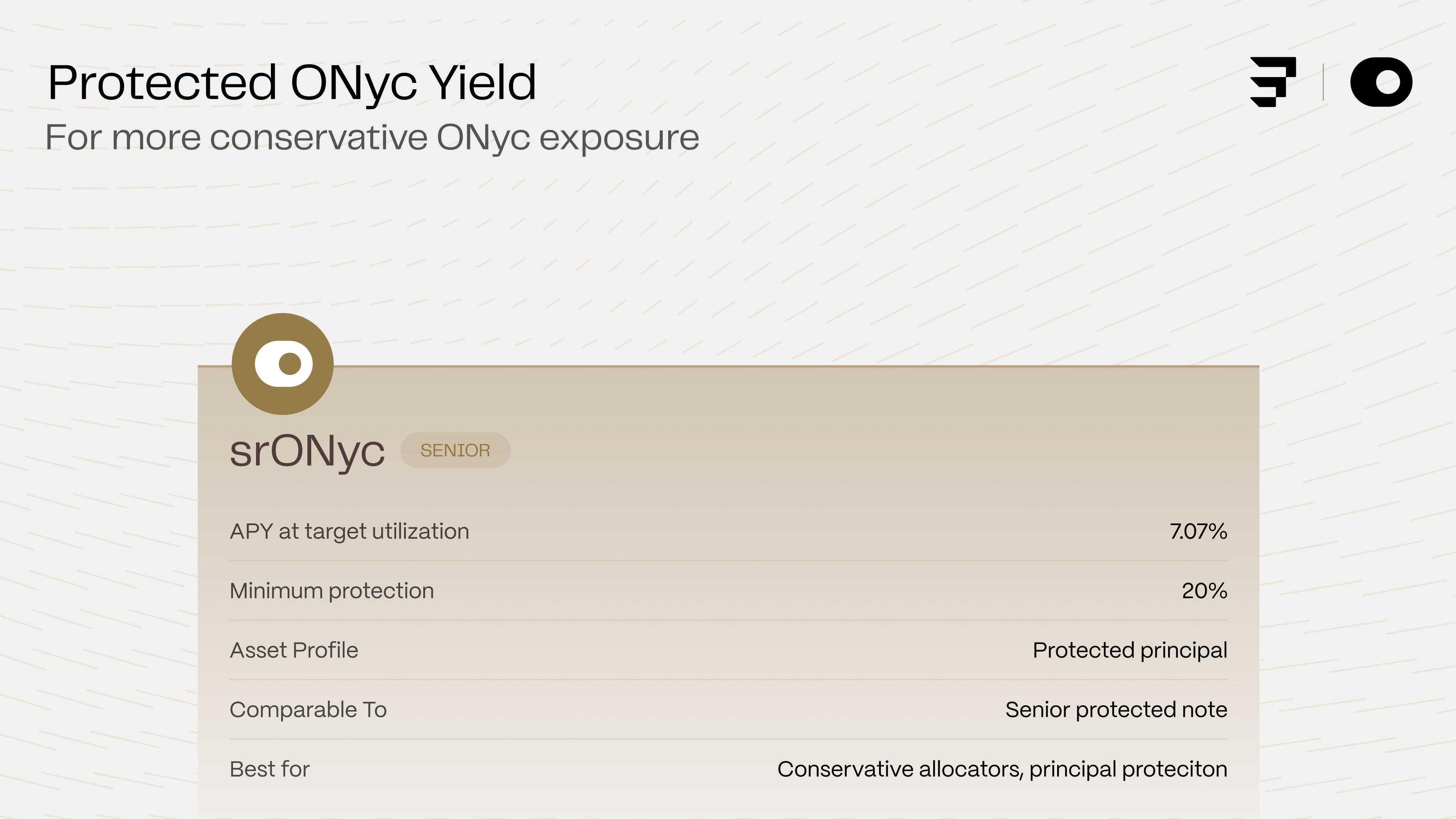
The market maintains a minimum 20% Junior protection level, although the actual level of protection can be higher depending on the composition of the market.
In exchange for this protection, Senior gives up a portion of the underlying yield to Junior. The resulting srONyc yield therefore varies with the utilization and composition of the tranching market.
srONyc can also be used elsewhere in DeFi, including rate trading through Exponent and looping strategies through Loopscale.
Best suited for users seeking ONyc exposure with an additional layer of first-loss protection.
Explore srONyc.
Amplified Yield
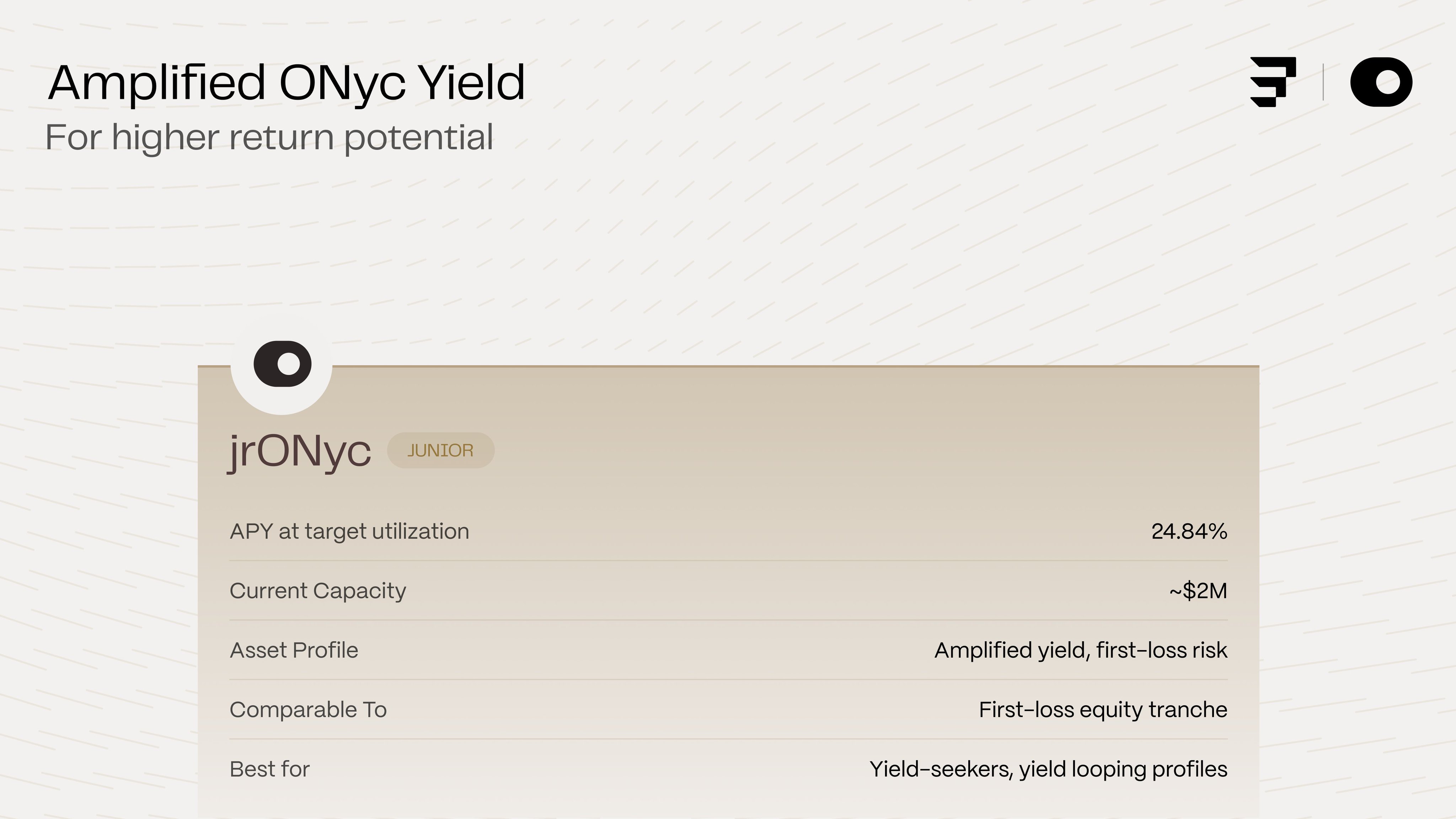
jrONyc represents the Junior side of Exponent's ONyc Tranching Market.
Junior capital earns its underlying share of ONyc yield plus yield redirected from the Senior tranche, creating the potential for higher yield than untranched ONyc.
In exchange for that higher potential yield, jrONyc provides the first-loss capital protecting srONyc.
.png)
.png)
.png)