Over the last decade, less than half of the world's economic losses from natural catastrophes were insured. The remaining deficit runs into hundreds of billions annually. The industry calls it the "protection gap."
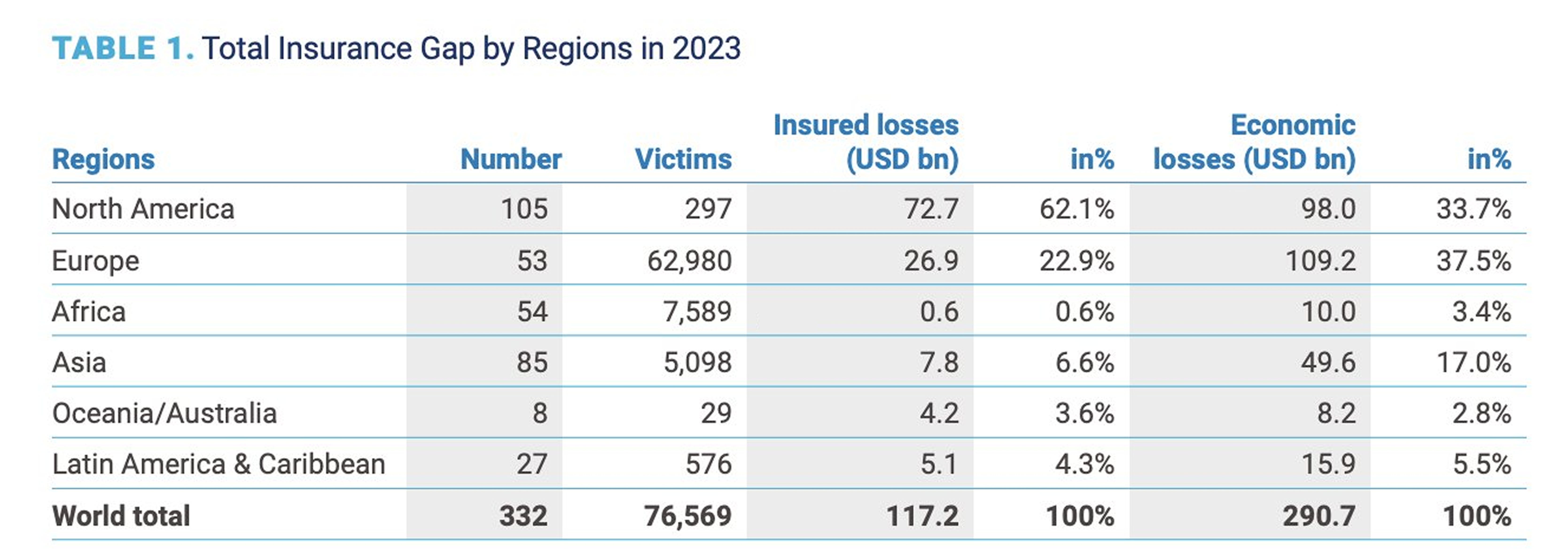
The conventional explanation is that these risks are simply too large to insure. We don't buy it. Catastrophe actuarial models are absurdly precise. They have been refined across decades of hurricane seasons, earthquake data, and flood cycles. The risk can be priced. The problem is the cost of holding the capital to back that risk. That is fundamentally a market structure problem.
The Architecture of Physical Risk
When a consumer or corporation purchases property insurance, they pay a premium to a primary insurer. The insurer pools those premiums to cover standard, localized damages: a house fire, a fender bender, a burst pipe.
But a Category 5 hurricane hitting a coastline is not a burst pipe. It looks like thousands of claims arriving simultaneously, each large enough to stress the insurer’s balance sheet.
To manage that exposure, the primary insurer pays a portion of the premiums it collects to a reinsurer, who agrees to absorb losses above a certain threshold. Reinsurance is the financial backstop that keeps insurers solvent when the worst actually happens.
The Trapped Capital Bottleneck
Here's where it breaks.
To guarantee this backstop, reinsurance syndicates must often remain locked in static, illiquid structures for the full duration of the contract, sometimes for years. There is limited ability to exit early, redeploy capital, or access liquidity while that capital remains committed.
If you've been stuck in a DeFi vault with no withdrawal function, you get the frustration. Now scale that to hundreds of millions. Only investors willing to tolerate long duration illiquidity can participate at scale.
Those investors demand a meaningful illiquidity premium. That premium inflates the cost of capital so much that underwriters walk away from risk they know perfectly well how to price. Underwriting the risk is not the constraint. Holding the capital to back it is what kills the deal.
That abandoned risk is what the industry calls the protection gap. Not a failure of modeling, but a capital supply chain that has not been modernized in decades.
How Onchain Liquidity Starts to Close It
OnRe was built for this specific problem.
We work alongside established underwriting partners, combining institutional market expertise with in house actuarial and underwriting capabilities to price and structure risk. As an onchain asset manager, our role is not only to source capital, but to make that capital more efficient.
We wrap traditional reinsurance contracts into a composable onchain asset and connect underwriting capacity to Solana’s settlement layer. Capital is deployed and held in a segregated account, where it is committed to collateralize potential claims over the life of the contract.
In return, capital providers receive ONyc.
Because ONyc exists on a high speed ledger, allocators are not locked into static OTC exposure. They hold a liquid, transferable claim. Need to exit? Redeem directly, subject to KYC and available liquidity, or trade on secondary markets. Want leverage? Use it as DeFi collateral.
The result is straightforward.
Capital becomes more flexible. Underwriters access more efficient funding. The illiquidity premium begins to compress. As the cost of capital declines, underwriting capacity expands. Risk that was previously uneconomical to insure becomes viable again.
That is how a liquid, onchain claim on real-world underwriting exposure begins to close the protection gap: not through better models, but through more efficient capital.
.png)